Arrived! 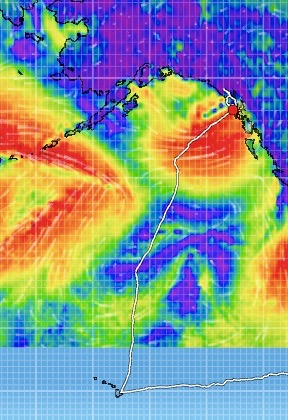
Lows and Highs (Pressure systems) along the way
6/27 – 7/19/20
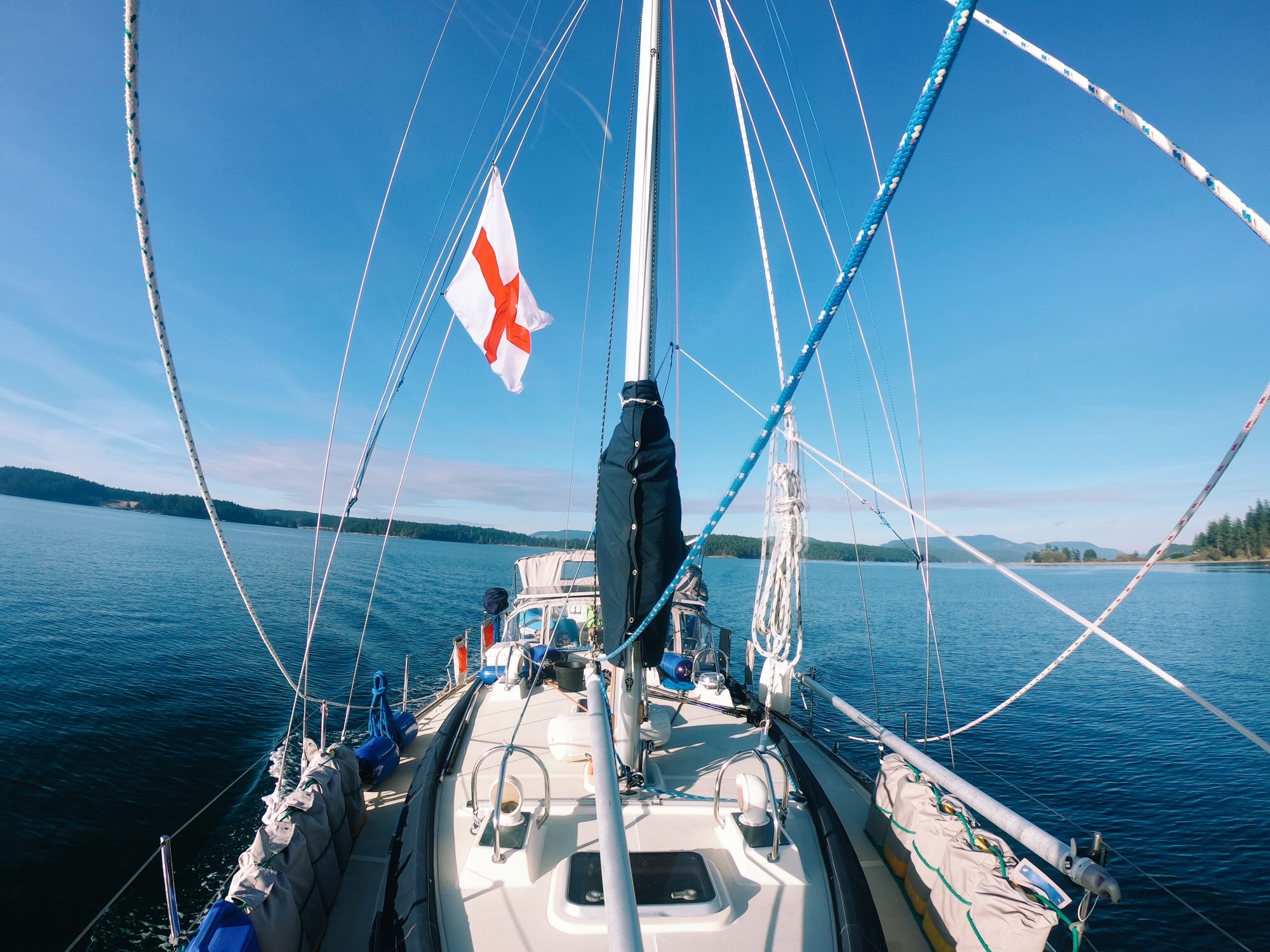
We arrived! from Hawaii after a challenging ocean passage with big seas and big weather. It was much more of a challenge than our Mexico to Hawaii passage….For the most part, our trip was fast- faster than we could have imagined or hoped for. We arrived well before our projected dates, the opposite to our Mexico-Hawaii trip. We are learning how to be more realistic and also better at projecting our times.
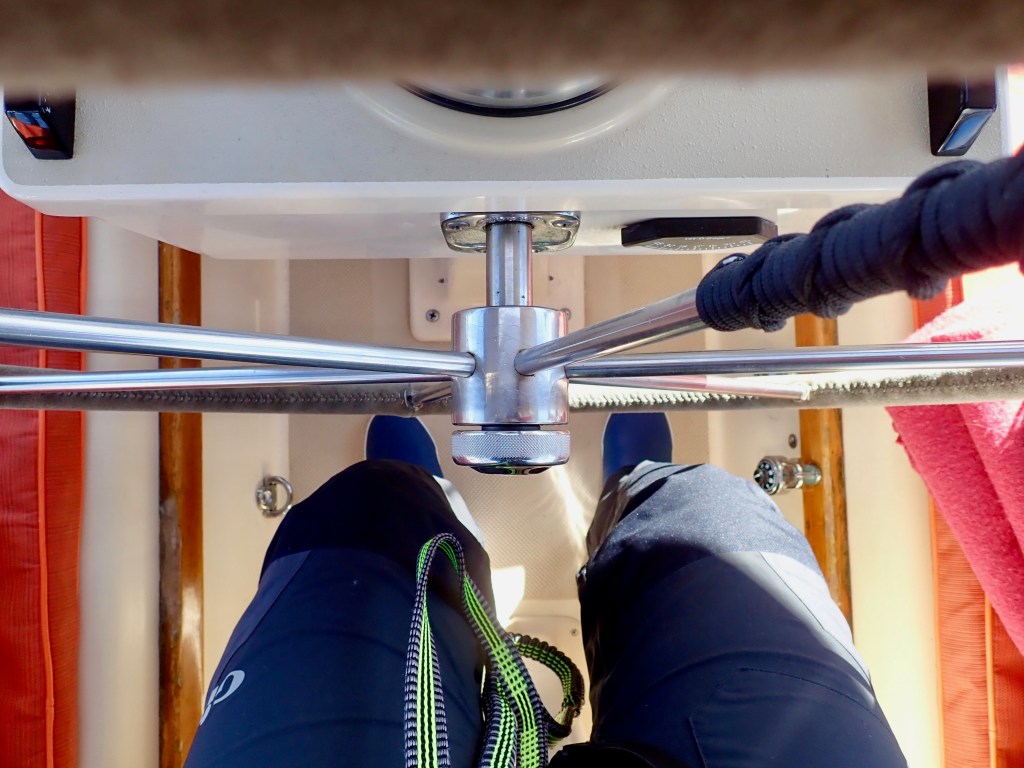
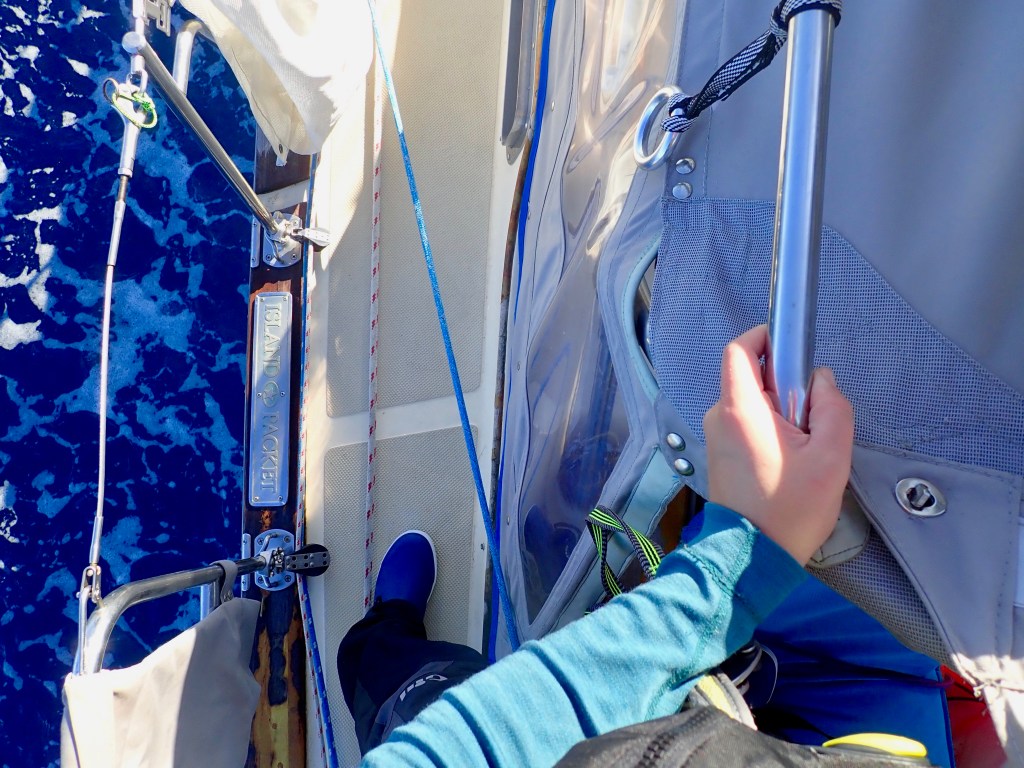
In the beginning we had good steady sailing Later we had bigger winds and frequently made 6-7 knots, having many 140- 150 mile days which is a record for us and fast for most sailboats.
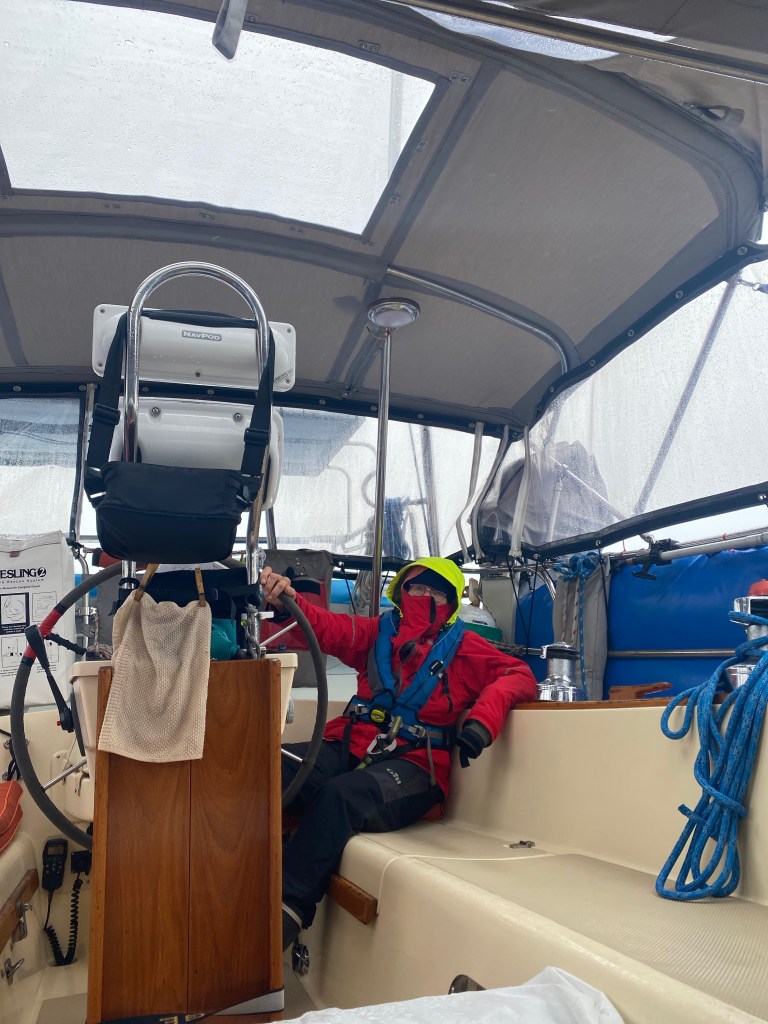
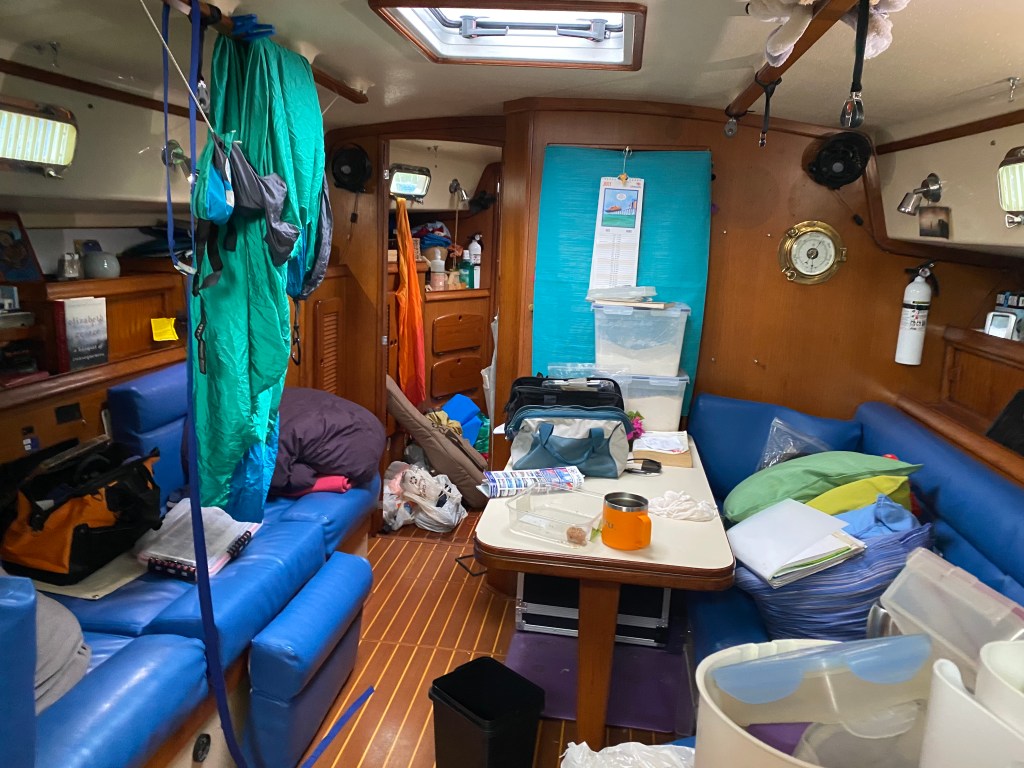
We also frequently hit our hull speed of 8 knots. Hull speed is individual for each boat- the fastest a boat can go based on its size and shape/design before diminishing returns i.e. the boat cannot really go effectively faster as the bow and stern waves create a trough that the boat “falls” into and loses momentum.. It was exhilarating and relentlessly bumpy with the NE trade winds on our beam for the beginning of our passage and later the Westerlies.
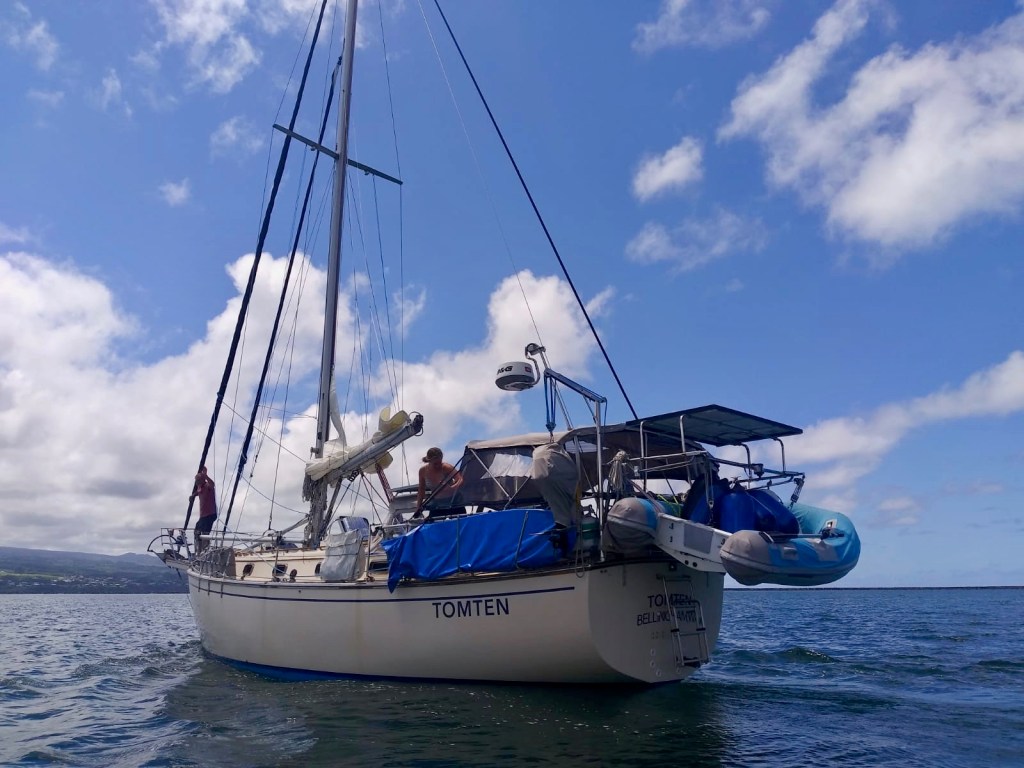
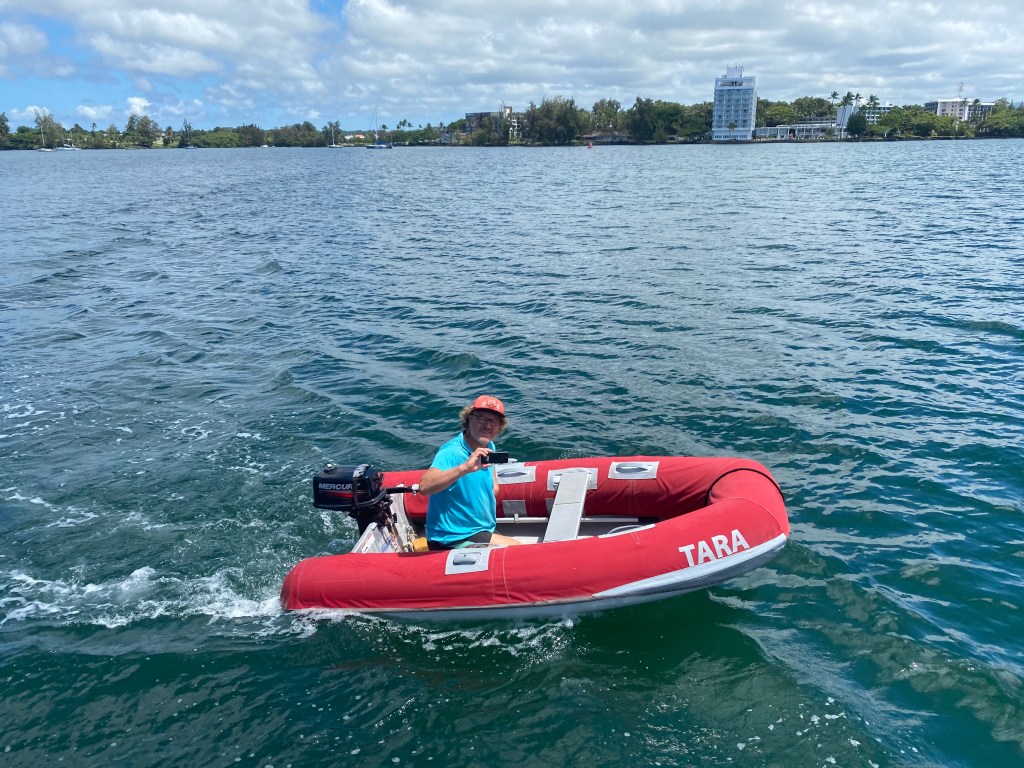
We left Hilo on June 27th and followed the Pacific High almost due north for about 1300 miles. We had an extra (last minute decision) crew member on board, Kiko. He is a boat builder of outrigger Hawaiian canoes and deeply invested in native Hawaiian history and culture. He is also a friend of Abigail so when he contacted us at the last minute (30 minutes before we left) about sailing with us we agreed. Prior to coming with us, he had been crewing on the SY Kwai, a 78’ sailing vessel that has been working on harvesting nets and plastics from the Pacific gyre for the last few years.
Traveling by boat is different than traveling on land; people frequently take on extra crew to help. In our case, we didn’t feel we needed the help but we welcomed expanding our trip to include another person. Kiko also does public speaking and one night he gave us one of his lectures in the cockpit complete with images about the ancient peoples of Hawaii.
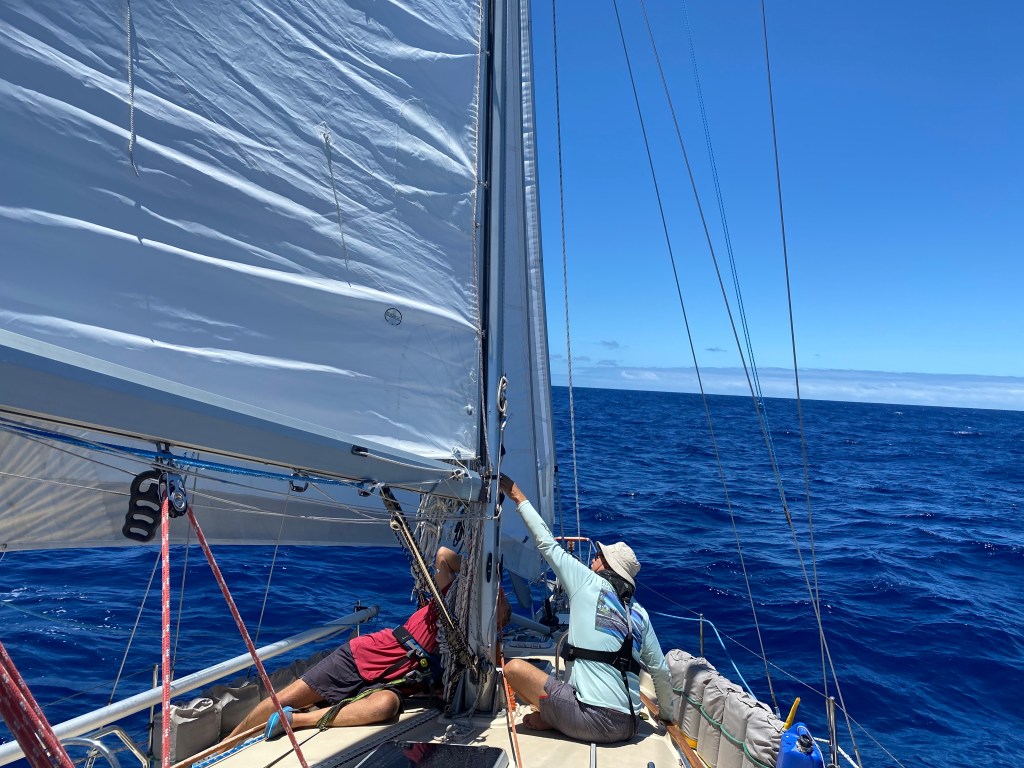
Before Kiko joined our boat, we had practice as a family learning how to share a small space and how to find privacy and a sense of space within that. The longer we live on the boat, the bigger it feels. Adding a stranger (at least at first) increased that challenge. Learning how to share small spaces gives us insight into how peoples across the world manage to share such small living spaces.
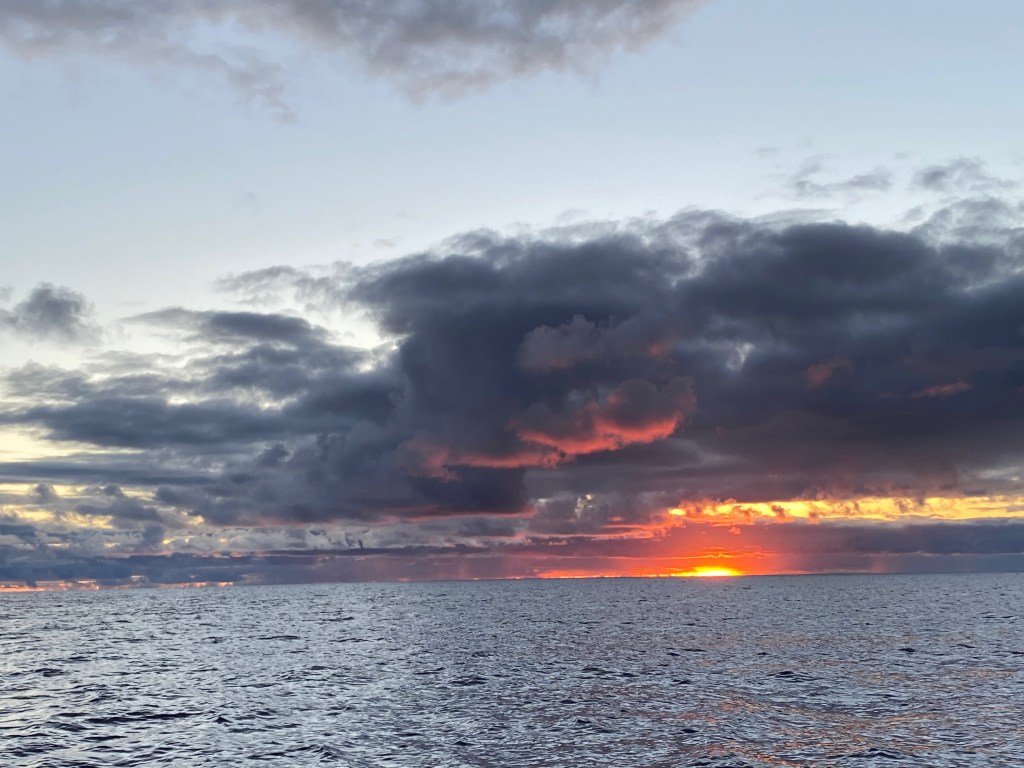
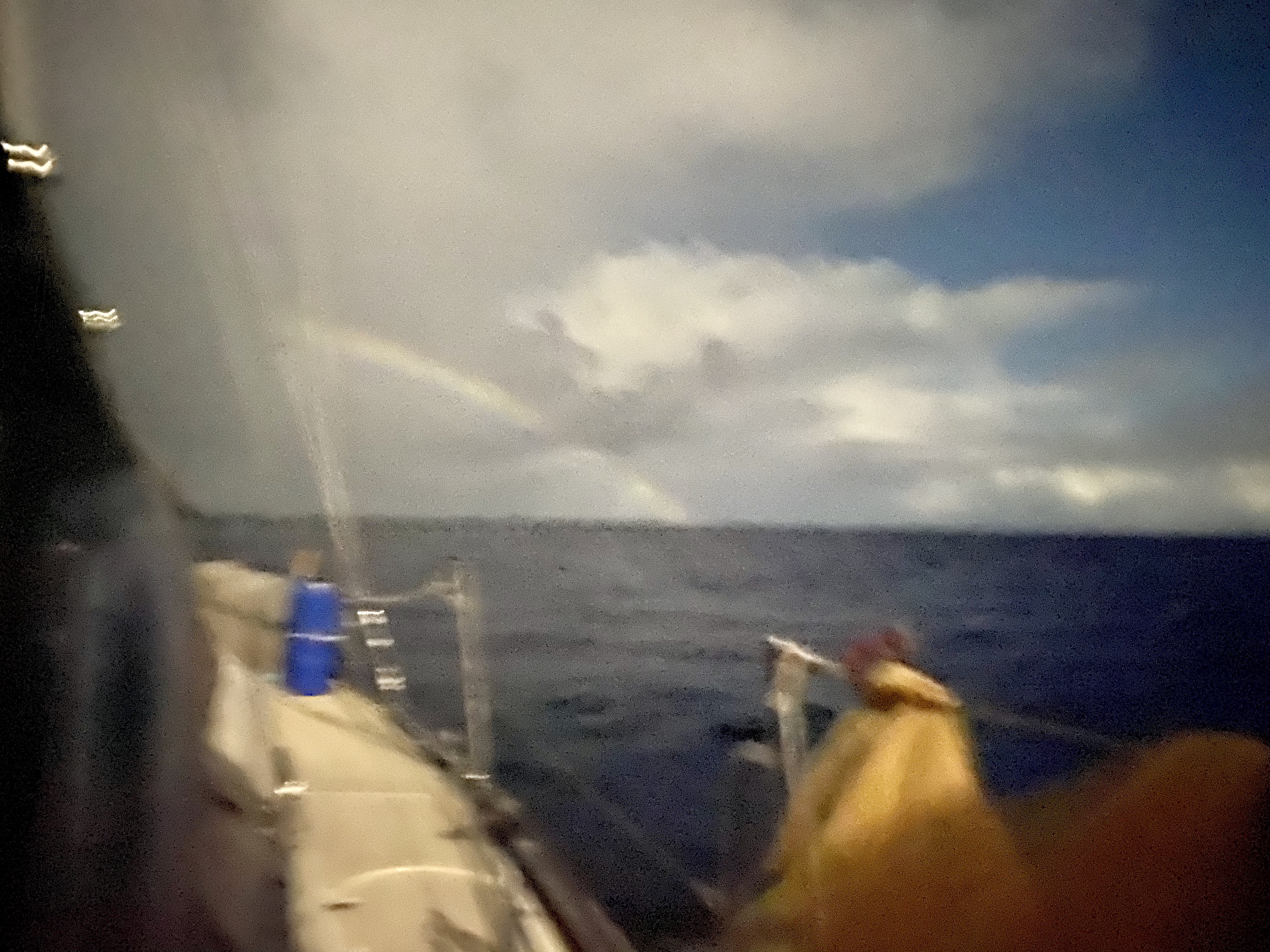
Weather was a big concern for us heading north into the Pacific. Hurricane season officially starts in June so we were a bit late leaving. Getting reliable weather forecasting before we left was important. Weather forecasting is only reliable about 3-4 days out although you can get forecasts for a week or so. Heading in to a 3 week passage means you can only rely on historic seasonal data for a bigger weather picture over the full extent of your journey before you leave.
To get around this, we used weather routing services to help us with route planning; emailed weather forecasts provided by meteorologists en route via satellite every 8 days or so, or anytime we request them. This was really helpful in addition to the other weather modeling system we use: a program called Predict Wind. We also download GRIB charts and text forecasts from NOAA. GRIB charts, or gridded binary data charts, provide large or local scale weather information with high and low pressure systems, wind and wave patterns etc. You can choose between surface charts or 500 millibar charts. The 500 millibar charts show the jet stream and global steering winds that drive weather patterns on a much larger scale. I enjoy watching the clouds and weather around us which gives for insight into the immediate weather over the next 12-24 hours, and reading and analyzing the NOAA weather charts available every 6 hours and up to 4 days out. Working with a meteorologist was perfect as I could draw my own conclusions and then get a professional interpretation to compare to.
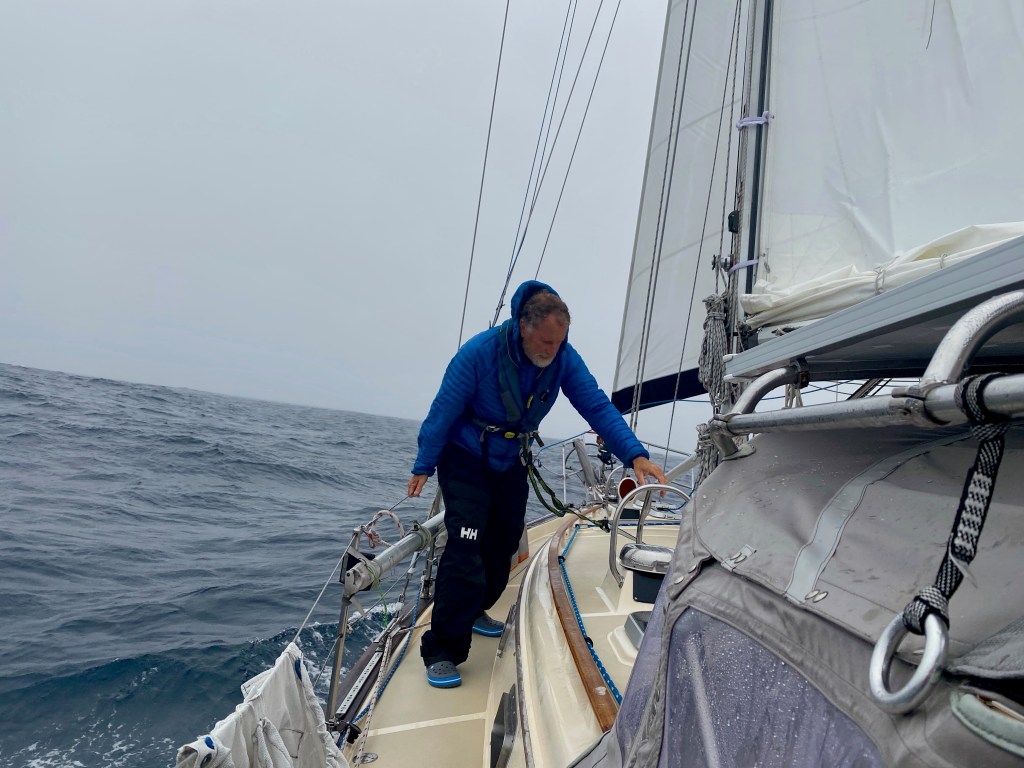
The challenges on this passage increased the further north we got as we moved toward the Aleutian low pressure system that sits (at this time of the year) near the Aleutian Islands and spawns low pressure system after system. The temperatures started to drop and the winds and seas rose. The skies were almost 100% overcast almost all the way with a few memorable blue sky moments or days. The low dark weather clouds constantly moving across our beam were imposing.
As the winds increased, the seas did also and Tomten was a rollercoaster for 3 weeks. I find this one of the most tiring parts of the ocean crossing. Cooking, sleeping, basic activities are all challenging. At one point Rosie was making tomato sauce in the kitchen and after an especially vicous roll of the sea, she was covered from head to toe in sauce along with every surface in the kitchen and companionway.
We never got into conditions that were more than we could handle but there is always the question lurking. With the help of the meteorologists and constant, obsessive downloading of weather, we were able to “thread the needle” or move between weather systems in ways designed to avoid the worst they had to offer. Sometimes this involved speeding up, slowing down or altering course in order to be in the right place at the right time (or more to the point, avoid the wrong places)
Having Kiko on board made for a fairly cushy passage initially, with each of us doing 4 hours on and 12 “off” For Paul and I, we are never truly ‘off’ as even when below we are constantly attuned for every sound and motion of the boat, wondering if we are hearing a new sound, if the boat is moving differently, what the seas are doing. Sound and motion are amplified down below and it is almost always a relief to me to get into the cockpit and see the wind and seas rather than imagining what they are doing.
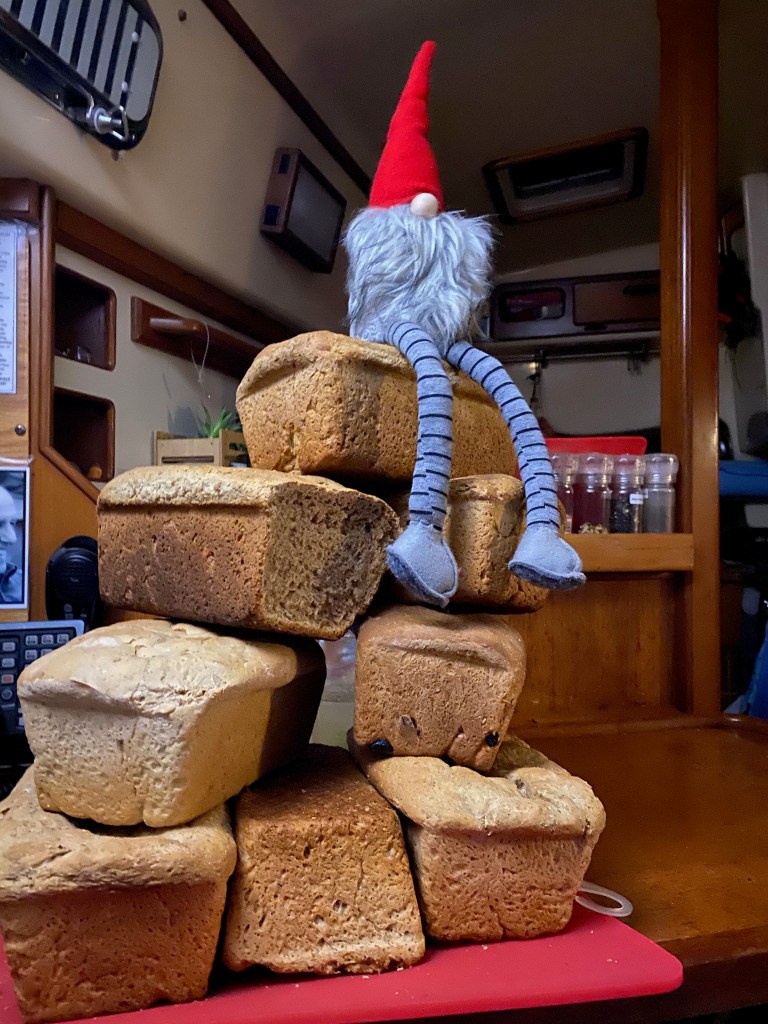
Bread baked & ready for the passage. 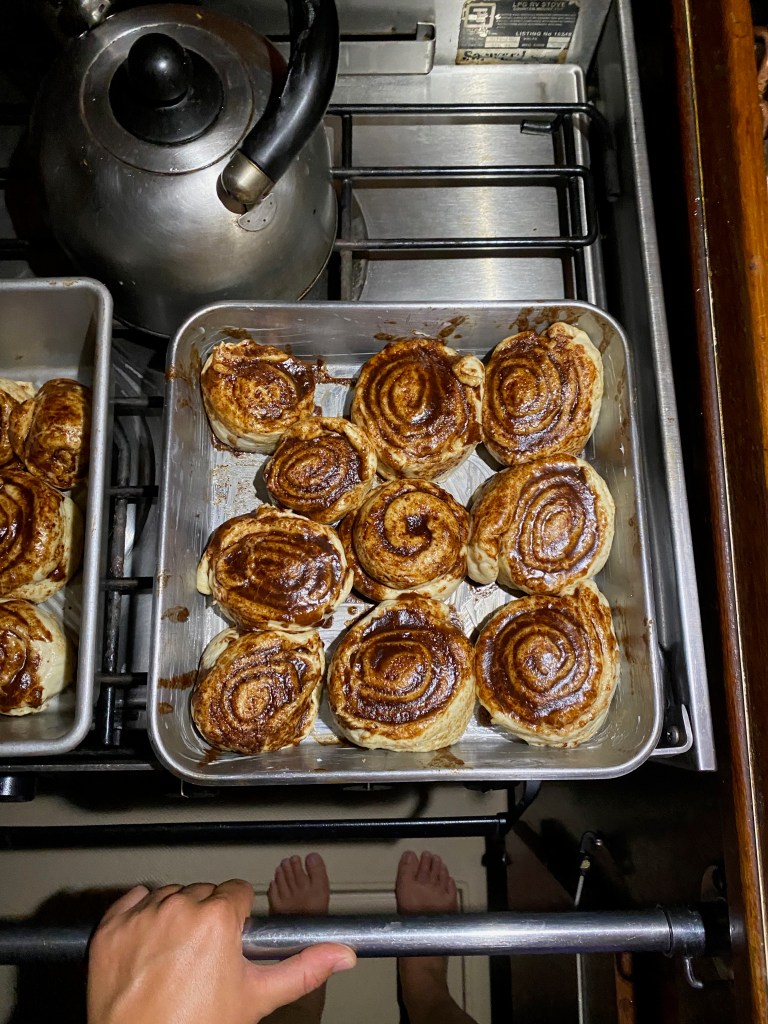
Rosie likes to bake underway, we don’t complain
Rosie is turning out to be an incredible helmswoman; calm, competent, getting her sail trim down, developing her mechanical skills for fixing things, working on weather analysis and course plotting etc. She had a very special experience- mid to late passage (closer to Alaska) when she was on an evening watch. She was reading and heard something. A huge whale stretched its length along the boat, blew breath and stayed awhile. She thinks it may have been a pilot whale. It then dove under the boat, swam a short distance away and then returned. That whale could have been anywhere in the ocean; there was no need for it to join Rosie and Tomten in the way it did. Rosie was profoundly moved by it. I was profoundly jealous and after that we called our watches “whale watches” but no one else saw one.
We did see Albatross, Petrels, Terns and other pelagic birds. One night we had a tiny seabird huddled on deck behind our jerry cans, trying to curl up. I had to go forward to change out our preventer lines which stop accidental jibes. I felt lucky to see it.
For the most part our spirits were good and it was very different being on our second major ocean passage. We settled in to it more quickly and knew it was a question of being present, not focusing too much on when we would get there, and making sure we got enough sleep and downtime.
It is a very special and awe inspiring experience being out on an ocean, out of reach of land and radio contact except for SSB and limited satellite communication. We are super careful to have our emergency contact equipment working and review our emergency protocols on a regular basis. There is nothing we take for granted.
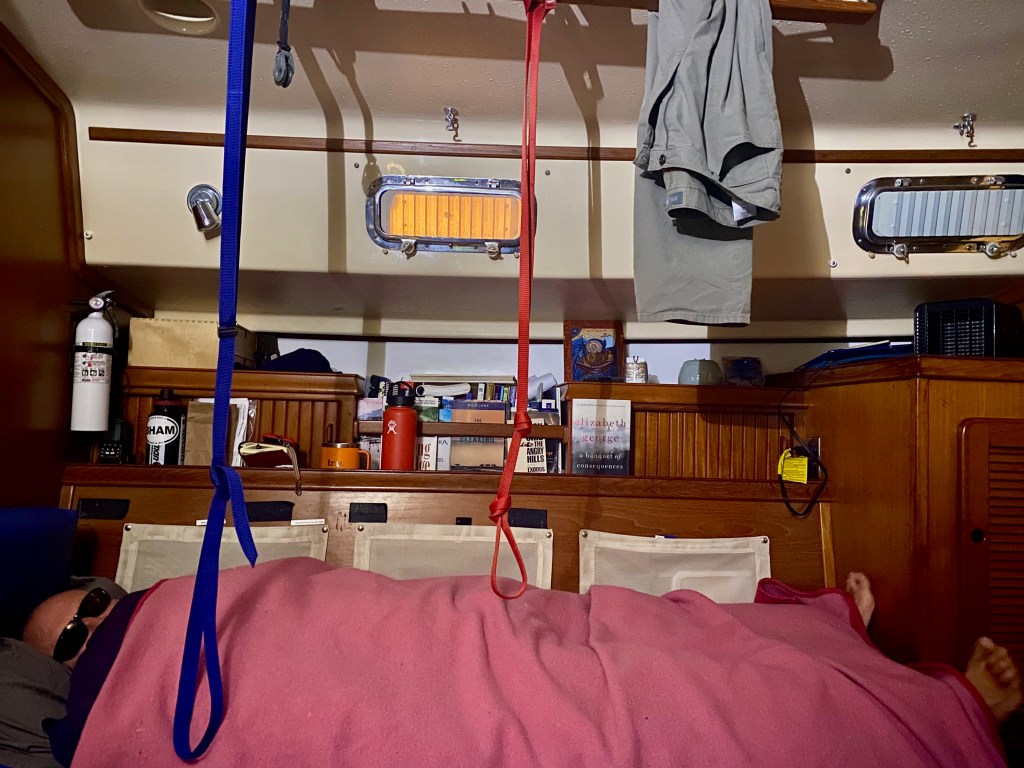
On this passage we had more than our usual share of equipment breakdowns on this passage, most importantly Paul. He had a terrible fall about 4 days out from Sitka. We didn’t know what was wrong with him (nothing broken, we thought ) but he was immobilized in enormous pain on a couch. We used a lee cloth to contain him on one of the couches and every cushion we could find on board to wedge him in as much as possible as the boat was being thrown about by big seas. Kiko’s friend Margaret is a doctor and she worked with Rosie by email and satellite phone to help us medicate him for pain from our medical stores (all those leftover codeine pills from various life moments- most of which were 10+ years out of date)
Paul’s fall coincided with 3 systems breakdowns: our charging system failed-and therefore onboard electrics: communications, navigation etc. were at risk. Our engine was having lots of issues and wouldn’t start for a short disturbing while. We rely on it to re- charge batteries when our solar panels can’t keep up in overcast conditions. We have two headsails and one of them, our staysail, was out of commission. Our mainsail track broke so we were unable to make to raise or lower the mainsail or make changes- we reefed it way down (reduced the sail area) and partially tied the sail on the mast.
Things started to feel frightening and overwhelming for a while but there wan’t much time to dwell on that. We also lost our wind instrument which was manageable- it meant we would have to use our senses to divine wind speeds and angles, which is always a good exercise. We had other equipment breakdowns but they were not critical. Ocean passages are hard on boats and people- things break, especially on 30 year old boats.
Rosie was able to focus on Paul and standing her watches, Kiko was able to help with watches and was super flexible about being where he was needed. I was able to concentrate on getting our systems going with lots of email support from amazing people. We got Miranda, the engine, running and found a way to get our batteries charged with some constant tweaking and manual regulating once we determined our regulator had died. We kept our fingers crossed as we motor-sailed full steam for 3 days to Sitka to get Paul to a harbor where he could get relief from the relentless motion of the boat and medical help.
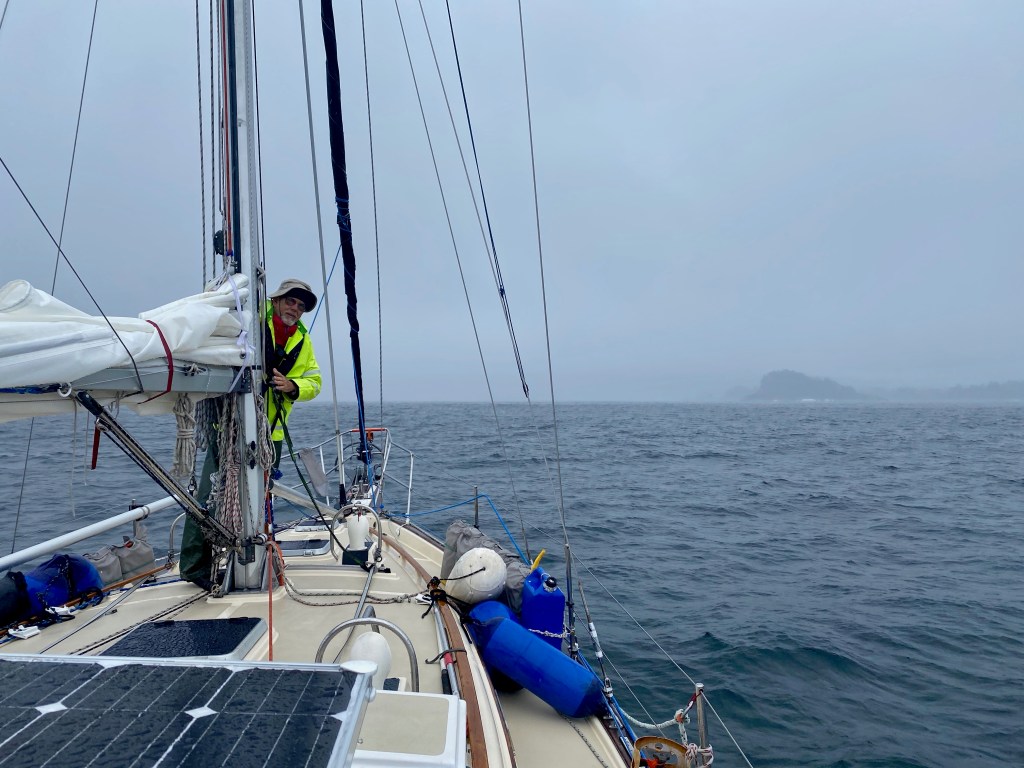
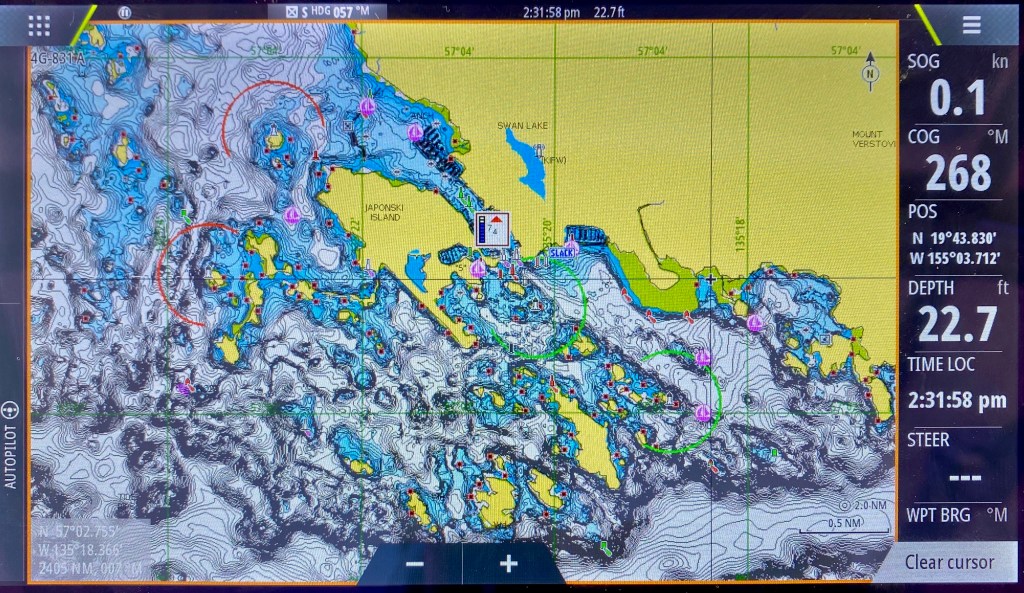
We arrived in Sitka on July 20th, a grey morning, having slowed down the night before so as to arrive at dawn. It is an imposing and intimidating approach with lots of outlying islands and big surf. I stood watch for 18 hours coming in. The harbor gave us a berth close to a parking lot ramp as we weren’t sure how we were going to get Paul off the boat and thought we may need an ambulance. As it turned out, he was able to get off the boat and we went to the emergency room. With Covid, they wouldn’t let us in so Rosie and I left him and walked home.
Paul has deeply stressed some nerves in his back. The doctor was confident he will heal and has prescribed movement, rest and ibuprofen so that was a relief although he will need much more than that I believe to heal…..
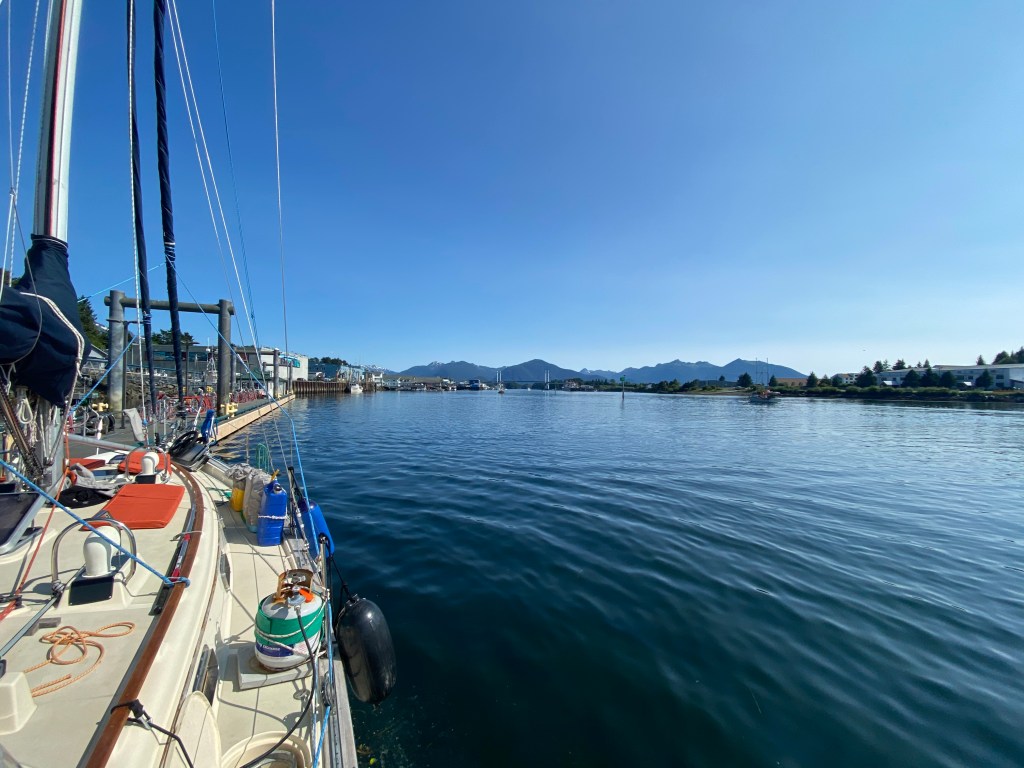
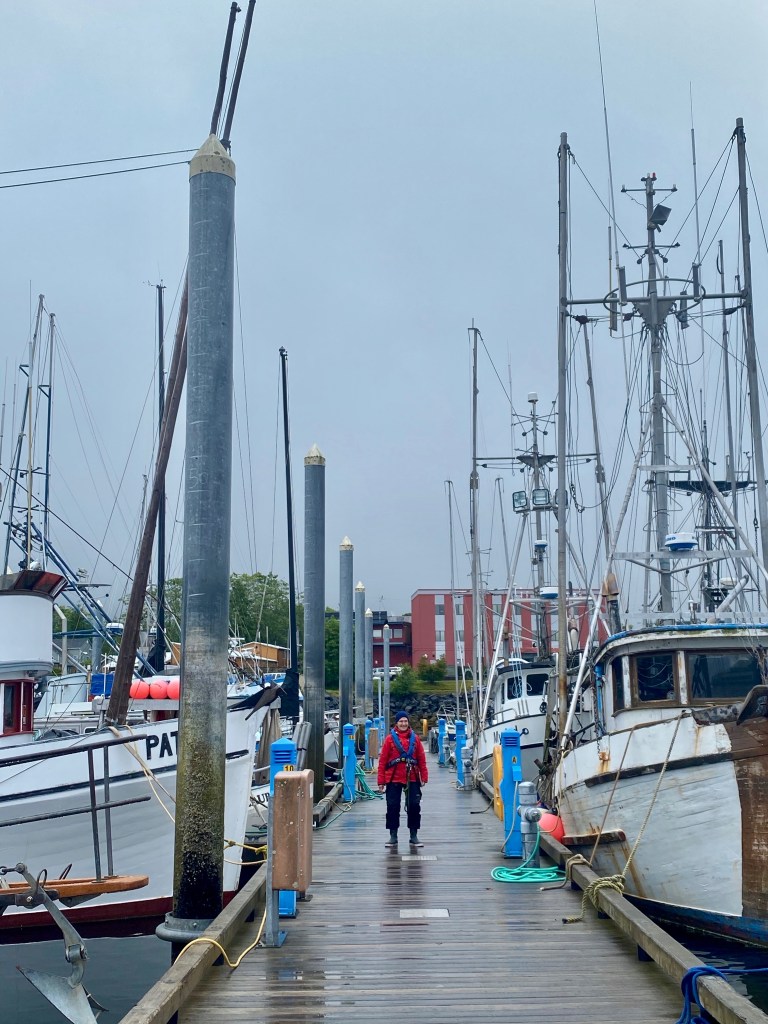
Sitka is a beautiful and incredibly warm and welcoming place. Our neighbor Rob has befriended us and shares his car with us. Everywhere we go people greet us and ask questions. Word got around town about the boat from Hawaii. We also met a man here who kept his boat in Singapore for 25 years and knew my father. That moved me completely.
One of the more surprising things about being here is the absolute joy about being back in the Northwest, climate and all. The first 4 or 5 days were chilly and overcast. It felt beautiful. Now we have typical late summer PNW weather and it is glorious. There is an amazing trail system here and the vegetation resembles what you find in the Cascades. The plants feel like old friends; skunk cabbage, huckleberries (black and red), salmonberries, spirea, devil’s club, blueberries, bunchberries, dogwood …..Ravens, sea lions, otters and orcas are very present here too. Baranof Island also has one of the largest concentrations of brown bears and we have seen plenty ( more in a later post)
 Sailing Tomten
Wow! We knew Rosie was back but wondering about you both- So glad you are all safe and hope Paul feels better soon. So impressed Joanna. Be well and look forward to hearing more not too exciting adventures!❤️ Jenny and Michael Blythe
LikeLike
Jenny, thanks so much for reading and keeping up on it. Hope all is well and look forward to catching up, Jo
LikeLike
What an incredible adventure! I really enjoyed reading all about it – and am so glad you’re all safe and well! Thank you for sharing and writing so beautifully about your journey! Sending love! Zooks x
LikeLike
Thank you for reading Emma! Hello to you all, and especially Alia….
LikeLike
We are planning to sail from Puerto Vallarta to Hawaii this May. Which weather routing service did you use and did you like them?
LikeLike
Hello- Thanks for reaching out. We used Commander’s Weather- they are phenomenal. Hope you have a good passage…..
LikeLike
Hello Joanna,
I will be doing this passage soon. Sooner than later since as you did, We will be a bit late in the season. We leave from BVI around June 1. Which might even put us later than your passage. I would be interested to speak with you more in depth about your experience. Could we correspond by email?!
LikeLike
Inspiration! I know nothing about sailing but am thoroughly intrigued with the idea. The blog post only aids in inspiring me to take a class! I’ll be moving to Alaska in the near future and would love to sail around Sitka. How much time did you spend exploring once in the Alaska territory?
LikeLike